Money and Relationships: Building a Financial Plan Together
Nov 06, 2026
You can love someone, build a life together, and still wonder how on earth their brain works when it comes to money. One of you wants to save. The other wants to book the holiday. One feels reassured by a healthy bank balance, while the other looks at it and thinks, “But what are we actually saving it for?” And somehow, a conversation about replacing the sofa turns into a disagreement about your entire approach to life.
Over the years, working with couples has taught me that personal finance is very, very personal. The numbers matter, of course, but so do the experiences, fears and hopes that each person brings to the conversation. Often, you’re looking at the same bank balance and seeing two completely different things.
Long before we earn our first salary, we’re learning about money. We notice whether it causes arguments, whether there always seems to be enough, or whether everyone goes quiet when a bill arrives. We pick up ideas about whether spending is something to enjoy or something to feel guilty about. We might not give those early experiences much thought, but they can stay with us for years.
Perhaps you grew up hearing, “We can’t afford it,” and remember how worried your parents were when something unexpected happened. Having money tucked away might now help you feel safe, even though your circumstances are very different. Your partner may have watched their parents work hard and save carefully, only for illness to take away the retirement they’d been looking forward to. Their lesson might be to enjoy life while you can.
Both responses make sense when you understand where they came from. But without that understanding, it’s easy to see the person you love as too cautious, too extravagant, or simply impossible to talk to about money.
Imagine one of you wants to spend £5,000 on a holiday, and the other immediately says it’s too much. One of you is thinking about how hard you work, how quickly the children are growing up, and the memories you could make together. The other is wondering what would happen if the boiler broke or someone lost their job. You both care about your family, but you have different ideas about what looking after them means.
Understanding that won’t automatically settle the holiday debate. You still have a decision to make. But it gives you somewhere more useful to start than “You worry too much” or “You’re always spending.”
In many couples, one person naturally takes on the finances. They know where the pensions are, keep an eye on the accounts and usually answer the questions in meetings. That can work perfectly well, but it’s easy for their priorities to end up shaping the whole plan without either person really noticing. The quieter partner might want to work less, help the children sooner, travel more, or simply understand whether everything will be okay. Those wishes need space too. You shouldn’t have to know the value of every pension or understand investment terminology to have a voice in your own future.
That’s why I want to hear from both people when we’re talking about a financial plan. What helps each of you feel secure? What would you love to do? What are you worried about? Is there something you keep putting off because spending the money feels uncomfortable? These conversations help us understand what the money actually needs to do for you.
Then we can look at the numbers and explore what’s possible. Perhaps you can keep a cash reserve that gives one of you reassurance while setting aside money for the experiences the other has been longing for. Perhaps seeing how spending a little more now could affect your future helps you feel comfortable booking that trip. Or perhaps something needs adjusting, and you can work out the next step together.
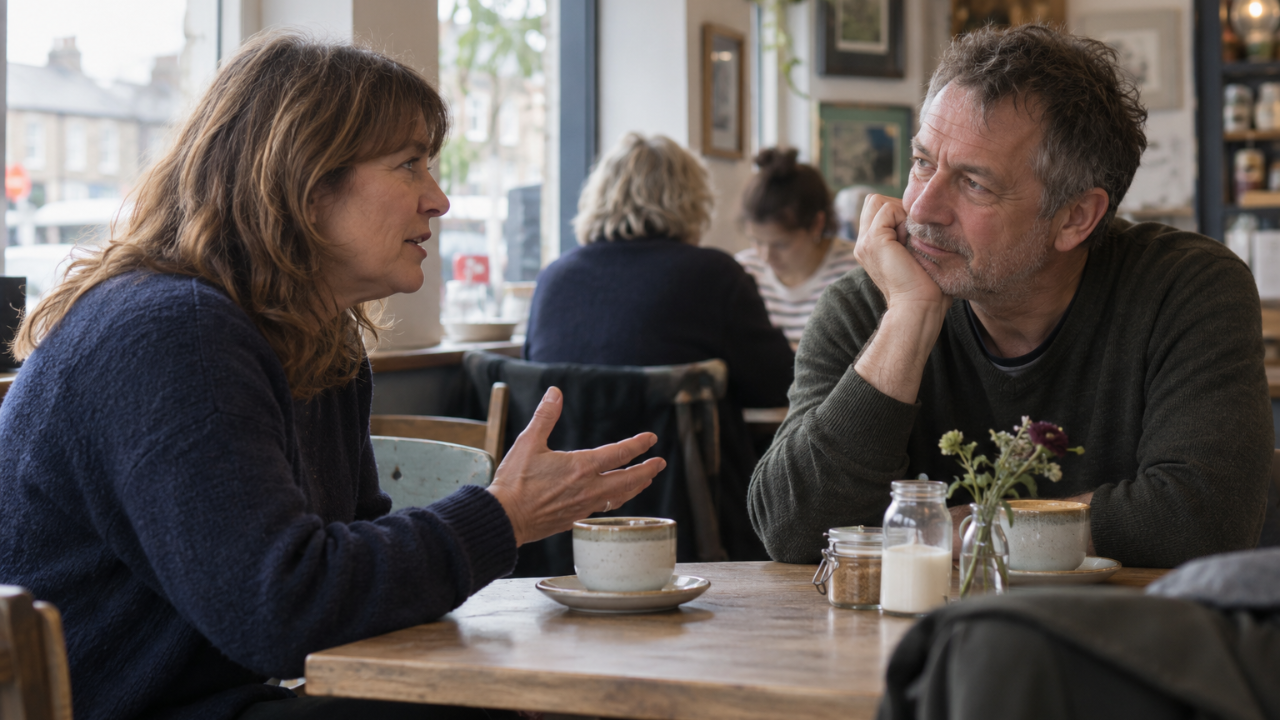
If money keeps becoming a sticking point, try asking each other, “What was money like in your house growing up?” Give each other time to answer. You might discover something you’ve never understood about the person sitting next to you. Then try asking, “What do you want our money to make possible?” You may find you share more hopes than you realise, even if you’ve been approaching them differently.
You don’t have to develop identical views on money to build a happy life together. But you both deserve to feel heard, and to see something of yourselves in the future you’re working towards. A good financial plan makes room for both of you. 🩷